The Nativity Story: Understanding Christmas Through the Birth of Jesus
The Nativity narrative sits at the very heart of Christmas, anchoring the holiday’s joy in a specific historical event: the birth of Jesus. For billions of people worldwide, this isn’t merely a charming story but a moment that reshaped human history. Yet the Nativity also reaches far beyond religious observance—it influences art, music, family traditions, and even how communities express generosity. Understanding the layers of this narrative offers practical insights for educators designing lesson plans, creators building meaningful content, business owners crafting seasonal campaigns, and families seeking deeper connection during December.
The Historical and Cultural Framework of the Nativity
When we talk about the Nativity, we refer to the account of Jesus’ birth as recorded in the Gospels of Matthew and Luke. These texts describe a young woman named Mary, her husband Joseph, a journey to Bethlehem, and a birth in humble surroundings because no inn was available. Shepherds in nearby fields received news from angels, and later, wise men from the East followed a star to bring gifts. This sequence of events forms the backbone of Christmas celebrations across denominations.
Scholars note that the historical context enriches our understanding. The Roman census, the political climate under Herod, and the social status of Jewish families in first-century Palestine all frame why the birth of Jesus occurred in Bethlehem rather than Nazareth. For researchers and educators, these details matter: they transform a familiar story into a case study of how ancient cultures documented pivotal moments. For example, the presence of shepherds—low-status workers—highlights a theme of inclusivity that continues to resonate in modern philanthropic campaigns during the holiday season.
Why the Setting Matters for Modern Observance
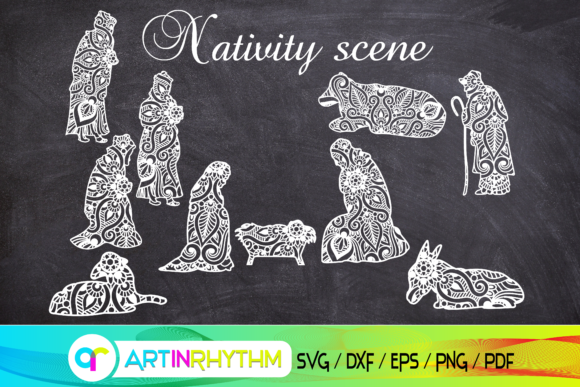
The setting of the Nativity—a stable or cave, a manger used as a cradle—became a powerful symbol of humility. This imagery directly shapes how millions decorate their homes and churches. Christmas crèches, whether hand-carved in Italy or mass-produced for retail, depict this scene. Business owners who sell Nativity sets or holiday decor benefit from understanding that customers are not just buying objects; they are acquiring symbols of hope and simplicity. Consumers often seek authenticity in these representations, preferring materials and designs that evoke a sense of historical reverence.
- Educators can use the Nativity setting to teach about ancient Near Eastern architecture, travel customs, and family structures.
- Creators of holiday media—from illustrators to filmmakers—draw on the stark contrast between the humble stable and the cosmic announcement of a savior’s birth.
- Researchers in anthropology and religious studies examine how the setting has been reimagined across cultures, from African Nativity scenes with local flora to Nordic versions featuring snow-covered stables.
The Artistic Legacy of Jesus’ Birth
Few events have inspired as much visual art as the birth of Jesus. From Renaissance masterpieces by Giotto and Botticelli to contemporary works in digital media, the Nativity remains a fertile ground for creative expression. For hobbyists and professional artists alike, studying these depictions reveals evolving theological emphases. Early Byzantine icons stress the divine nature of the infant, while later Western paintings often highlight the tender humanity of Mary and Joseph.
This artistic tradition has practical applications today. A graphic designer creating a church bulletin or a greeting card can draw on compositional elements from classic Nativity paintings—the triangular grouping of figures, the use of light to draw attention to the child, the inclusion of animals that create a sense of peaceful enclosure. Similarly, a museum educator preparing a tour can link the artistic choices of each era to the broader cultural shifts in how Christmas was understood.
Music and the Nativity Narrative
The musical tradition surrounding the Nativity is equally rich. Carols such as “Silent Night,” “O Little Town of Bethlehem,” and “Hark! The Herald Angels Sing” directly recount elements of the Jesus birth story. For music teachers and choir directors, these songs offer opportunities to discuss lyrical theology and historical composition styles. For business owners, the emotional resonance of Nativity-based music can enhance customer experiences in retail spaces, creating an atmosphere of warmth and reflection amid the commercial rush of December.
- Use case for educators: Compare lyrics across carols to identify which parts of the Nativity account each emphasizes—some focus on the angels, others on Mary, others on the journey.
- Use case for creators: Compose new arrangements of traditional Nativity carols for modern ensembles, blending ancient melodies with contemporary instrumentation.
- Use case for consumers: Curate playlists that separate Nativity-centric songs from secular winter songs, deepening the spiritual focus of personal or family celebrations.
Modern Traditions Rooted in the Nativity
Many beloved Christmas customs trace directly back to the Nativity story. The practice of giving gifts echoes the wise men bringing gold, frankincense, and myrrh. The tradition of nativity scenes, or crèches, began with St. Francis of Assisi in 1223 and quickly spread across Europe. Today, setting up a Nativity display remains a central activity for families, churches, and even public institutions.
For business owners, this tradition creates both opportunity and responsibility. A retailer selling Nativity figures must consider quality, accuracy, and inclusivity—offering sets that reflect diverse ethnicities and materials that last for generations. For hobbyists who collect Nativity sets from around the world, the variety is staggering: Peruvian sets carved from gourds, German sets with intricate woodwork, and Mexican sets with ceramic figures dressed in regional attire.
The Nativity as a Teaching Tool
Educators across grade levels use the Nativity to teach critical thinking and cultural literacy. A primary school teacher might have students act out the Nativity, assigning roles and discussing each character’s perspective. A high school literature teacher could analyze the Gospel accounts as primary sources, comparing narrative styles and thematic emphasis. A university professor in religious studies might examine how the birth of Jesus has been interpreted through liberation theology, feminist readings, or postcolonial frameworks.
These educational applications demonstrate the Nativity’s versatility. It works as a springboard for discussions about history, ethics, art, sociology, and even economics—consider the economic impact of pilgrimage to Bethlehem or the global trade in Nativity-related goods.
Theological Depth and Practical Faith
For those who approach the Nativity from a faith perspective, the Jesus birth carries profound theological meaning. It represents the Incarnation—the belief that God became human. This concept challenges believers to consider humility, vulnerability, and divine love. Pastors and religious educators can draw on the Nativity to illustrate complex doctrines in accessible terms, using the physical details of the story—the manger, the swaddling clothes, the star—as metaphors for spiritual truths.
However, theological depth does not require academic training. Many families incorporate Nativity-focused devotions during Advent, reading a passage each night and discussing what it means for their lives. This practice builds anticipation for Christmas and keeps the birth of Jesus at the center of the celebration. For researchers studying lived religion, these domestic rituals offer rich data about how ancient narratives are adapted to contemporary life.
Interfaith and Secular Considerations
While the Nativity is specifically Christian, it also appears in interfaith contexts. Many non-Christian families appreciate the story as a foundational Western cultural text, and some incorporate Nativity scenes alongside other holiday symbols. Museum educators, public librarians, and community organizers can present the Nativity as part of a broader mosaic of winter celebrations, respecting its religious significance while making it accessible to diverse audiences.
- For community leaders: Host a “Nativity around the World” event that displays artistic interpretations from different cultures, accompanied by brief explanations of the story and its variations.
- For business owners: Offer Nativity-themed products that appeal to both practicing Christians and those who appreciate the story as cultural heritage, using inclusive language in marketing materials.
- For creators: Develop content that explains the Nativity in a way that is informative but not prescriptive, allowing audiences to engage with the story on their own terms.
Global Expressions of the Nativity
The Nativity is not a static story. Every culture that embraces Christmas adapts the birth of Jesus to its own context. In Ethiopia, the Nativity is celebrated on January 7 with processions and traditional coffee ceremonies. In the Philippines, the “Simbang Gabi” novena leads up to Christmas Eve Mass, with Nativity scenes often placed in town plazas. In Mexico, “Las Posadas” reenacts Mary and Joseph’s search for shelter over nine nights, culminating in a community celebration.
For travel professionals and cultural enthusiasts, these global expressions offer endless exploration. A travel blogger might document Nativity traditions across different countries, highlighting local foods, costumes, and music. A researcher could study how migration spreads and transforms Nativity practices—for instance, how Filipino Simbang Gabi is now celebrated in American cities with large Filipino communities.
Practical Advantages of a Cross-Cultural View
Understanding global Nativity traditions enriches anyone’s Christmas experience. A family looking to deepen their holiday might adopt a tradition from another culture, such as placing a “Nativity rock” outside their home to symbolize shelter for travelers. A teacher can assign students to research and present a Nativity tradition from a country of their choice, fostering global awareness. A business owner selling holiday food or decor can draw inspiration from international styles, offering products that stand out in a crowded market.
- Characteristic: Every culture emphasizes a different aspect of the story—some focus on the journey, others on the birth itself, others on the celebration that follows.
- Advantage: This variety means there is always something new to learn or incorporate, preventing the holiday from becoming stale or purely commercial.
- Consideration: When adopting traditions from other cultures, do so with respect and attribution, acknowledging the source rather than treating it as a novelty.
Real-World Relevance Across Professions
The Nativity, Christmas, and the birth of Jesus are far more than religious concepts—they are cultural touchpoints that influence multiple industries. For marketers, the Nativity provides a ready-made narrative of hope, giving, and family that resonates across demographics. For mental health professionals, the story of a family under duress finding shelter and support can open conversations about resilience and community care. For architects and interior designers, the aesthetic of the stable—simple, warm, centered on a focal point—inspires seasonal home décor and even permanent design principles.
Educators at all levels find the Nativity useful for teaching narrative structure, historical context, and comparative religion. Creators in film, literature, and visual arts continue to revisit the Nativity because it offers a perfect balance of intimacy and grandeur—a single family’s struggle set against a cosmic backdrop. Hobbyists who build model Nativity scenes or research historical depictions find endless depth in the subject. Business owners who align their products or services with the themes of the Nativity can create authentic connections with customers seeking meaning during the holiday season.
Ultimately, the enduring power of the Nativity lies in its simplicity. The story of a child born in humble circumstances, greeted by both lowly shepherds and learned magi, continues to speak to people of all backgrounds. Whether approached as sacred scripture, cultural treasure, artistic muse, or family tradition, the birth of Jesus remains a rich source of insight and inspiration. By engaging with the Nativity thoughtfully—considering its historical roots, cultural expressions, and practical applications—we can celebrate Christmas with greater depth, creativity, and connection.