The Nativity of Jesus: Understanding the Birth That Changed History
The story of the Nativity and Jesus' birth is one of the most recognized narratives in human history. For billions of people around the world, it marks a pivotal moment that reshaped spiritual thought, cultural traditions, and even the way we measure time itself. Yet beyond the familiar images of shepherds, angels, and a star-lit stable lies a much deeper and more practical significance than many realize.
When we talk about the Nativity, we are referring to the account of Jesus Christ's birth as recorded in the Gospels of Matthew and Luke. These texts describe a young woman named Mary, her betrothed Joseph, a journey to Bethlehem, and a birth that took place in humble surroundings. But the event itself carries layers of meaning that extend far beyond the simple narrative. Understanding the Nativity and Jesus' birth means exploring not only the historical and religious context but also the enduring relevance of this story for people today.
The Historical Context of the Nativity
To truly appreciate the Nativity and Jesus' birth, it helps to understand the world into which Jesus was born. The Roman Empire ruled over Judea with a heavy hand. Caesar Augustus had issued a decree that a census should be taken of the entire Roman world, which is why Joseph and Mary found themselves traveling from Nazareth to Bethlehem. This was not a convenient journey. For a young woman who was near the end of her pregnancy, traveling roughly ninety miles over rugged terrain would have been physically demanding and dangerous.
The Gospels tell us that when they arrived in Bethlehem, there was no room for them in the inn. This detail is often romanticized, but the reality was likely stark. They found shelter in a place where animals were kept, and it was there that Jesus was born and laid in a manger. This setting is central to the Nativity and Jesus' birth because it underscores a theme of humility that runs throughout the entire story. The King of Kings, as Christians believe, entered the world not in a palace but in a feeding trough.
Archaeological and historical research has shed additional light on what first-century Bethlehem was like. It was a small village, not a bustling town. The concept of an "inn" may have been more of a guest room in a family home, and the "stable" might have been a cave used for housing animals. These details do not diminish the story; they enrich it, showing how the Nativity and Jesus' birth were deeply embedded in the real, gritty circumstances of ordinary life.
The Characters in the Nativity Narrative
The Nativity and Jesus' birth involve a cast of characters who each play a vital role. Mary is often depicted as serene and composed, but consider what she was facing. She was a young woman, likely a teenager, who had been told by an angel that she would conceive a child by the Holy Spirit. In her culture, this could have meant disgrace, rejection, even death by stoning. Yet she responded with profound acceptance. Joseph, too, faced a difficult choice. When he discovered Mary was pregnant, he planned to quietly end their engagement, but an angel appeared to him in a dream, instructing him to take Mary as his wife and to name the child Jesus, "because he will save his people from their sins."
Then there are the shepherds. In first-century society, shepherds were not respected. They were considered lowly, often unreliable, and even ritually unclean. Yet it was to these shepherds that the angels announced the birth of the Savior. This choice highlights a pattern that runs throughout the Nativity and Jesus' birth: God chooses the overlooked, the humble, and the unexpected. The shepherds become the first witnesses, spreading the news of what they had seen and heard.
The Magi, or wise men, appear later in the story, though they are often included in Nativity scenes. These were scholars from the East, likely Persia or Babylon, who had studied the stars and recognized a sign of a king's birth. They brought gifts of gold, frankincense, and myrrh, each carrying symbolic meaning. Gold for a king, frankincense for a priest, and myrrh for one who would die. Their journey also demonstrates that the Nativity and Jesus' birth were not just a local event but one with cosmic and international significance.
Why the Nativity Matters Beyond Religion
Even for those who do not hold religious beliefs, the Nativity and Jesus' birth have left an undeniable imprint on Western civilization and beyond. Art, music, literature, and social customs have been shaped by this story for two thousand years. The image of a mother and child, of a humble birth in difficult circumstances, resonates on a deep human level. It speaks to themes of hope, resilience, and the idea that something profoundly good can emerge from the most modest of beginnings.
In practical terms, the Nativity and Jesus' birth have influenced how we think about charity, compassion, and care for the vulnerable. The Christmas season, which centers on this birth, has become a time when many people give to those in need, volunteer their time, and reach out to family and friends. While commercialism often overshadows the holiday, the core of the celebration remains connected to the Nativity story. Whether someone attends a church service, watches a Nativity play, or simply spends time with loved ones, the echoes of that first birth in Bethlehem are still present.
The Nativity in Modern Culture and Practice
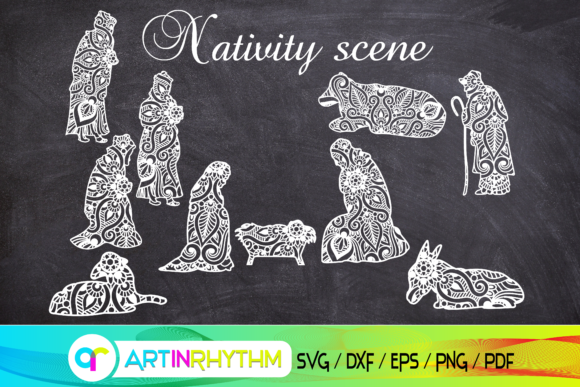
Today, the Nativity and Jesus' birth are commemorated in countless ways. Churches around the world hold candlelight services on Christmas Eve, reenacting the story with readings and hymns. Nativity scenes are displayed in homes, public squares, and even in front of government buildings, though this sometimes sparks debate about the separation of church and state. Schools often put on Nativity plays, giving children a creative way to engage with the narrative. For many families, setting up a Nativity scene together is a cherished tradition that helps focus attention on the meaning of the season.
Beyond formal observances, the Nativity and Jesus' birth continue to inspire charitable initiatives. Many organizations run "Giving Trees" or "Angel Tree" programs during Advent, providing gifts for children and families in need. Food drives, coat drives, and homeless shelters see increased support during this time. The connection to the Nativity is clear: if God chose to enter the world in poverty, then those who are poor and marginalized deserve our attention and care.
There is also a growing interest in understanding the historical and cultural background of the Nativity. Books, documentaries, and online resources explore what life was like in first-century Judea. People want to know what the census really entailed, what a manger looked like, and what the star of Bethlehem might have been. Scholars have proposed various theories about the star, ranging from a conjunction of planets to a supernova or a comet. This curiosity shows that the Nativity and Jesus' birth remain compelling topics for study, not just for believers but for anyone interested in history and culture.
Common Questions People Ask About the Nativity
When people first begin to explore the Nativity and Jesus' birth, they often have practical questions. How long did Mary and Joseph stay in Bethlehem? What happened to the Magi after they left? Why is the date of Christmas celebrated on December 25th when the Bible does not give a specific date? These are reasonable inquiries, and the answers reveal a lot about how traditions develop over time.
The date of December 25th, for instance, was likely chosen in the fourth century by the early church. Some scholars suggest it was an intentional overlap with existing pagan festivals like Saturnalia or the birthday of the Unconquered Sun (Sol Invictus). Others argue that early Christians calculated the date based on the belief that Jesus was conceived on the same date he died, which they placed around March 25th, leading to a birth nine months later on December 25th. Regardless of the exact date, the choice was made to give Christians a distinct celebration that centered on the Nativity and Jesus' birth rather than on Roman holidays.
Another common question involves the animals traditionally included in Nativity scenes. While the Gospels do not mention any animals present at the birth, the reference to a manger implies that livestock were nearby. Over the centuries, donkeys, oxen, sheep, and camels have become standard fixtures in Nativity art and plays. This is a good example of how the Nativity and Jesus' birth have been embellished and expanded upon by tradition, adding layers of meaning and charm to the basic story.
Practical Benefits of Reflecting on the Nativity
Taking time to reflect on the Nativity and Jesus' birth can have genuine benefits for personal well-being. In a fast-paced world where stress and anxiety are common, the Nativity story offers a moment of stillness. It invites people to slow down, to consider themes of patience, trust, and hope. For parents, sharing the story with children can be a way to pass on values of generosity, humility, and kindness. For individuals, reading the biblical accounts with fresh eyes can provide a new perspective on life's challenges.
The Nativity and Jesus' birth also provide a framework for dealing with disappointment. Many people enter the Christmas season with high expectations, only to feel let down when reality does not match the ideal. The Nativity, however, is not a story of perfection. It is a story of a birth that happened in less-than-ideal circumstances. There was no room, no comfort, no privacy. Yet it was precisely in that imperfection that something beautiful occurred. This can be a powerful reminder that our own imperfect lives and situations are still capable of producing good things.
How to Engage with the Nativity Story Today
If you want to engage more deeply with the Nativity and Jesus' birth, there are several practical steps you can take. First, read the original accounts in the Gospels of Matthew and Luke. They are short and can be read in less than half an hour. Pay attention to the details you may have overlooked. Notice the emotions, the decisions, the risks involved. Second, consider visiting a Nativity display at a local church or museum. Seeing different artistic interpretations can open your eyes to cultural variations and historical insights.
You might also choose to participate in an Advent devotional or study group. Many resources are available online and in print that walk through the Nativity and Jesus' birth week by week leading up to Christmas. These often include reflection questions, prayers, and practical actions. Third, if you have children, involve them in creating a Nativity scene, whether through drawing, crafting, or acting out the story. Engaging multiple senses helps the story come alive in a new way.
Finally, consider how the Nativity and Jesus' birth can inform your actions during the holiday season. Instead of focusing only on shopping and parties, set aside time for quiet reflection. Reach out to someone who is lonely or struggling. Donate to a cause that supports families in need. These actions connect the ancient story to modern life in a tangible way.
Observing the Enduring Impact of the Nativity
The Nativity and Jesus' birth have stood the test of time for good reason. They present a narrative that is at once humble and grand, personal and universal. Whether approached from a standpoint of faith, history, or cultural appreciation, the story offers something of value. It challenges the notion that power and prestige are what matter most. It elevates the ordinary and the overlooked. It reminds us that light can shine in the darkness, even when the darkness seems overwhelming.
For Christians, the Nativity and Jesus' birth are the beginning of the story of salvation. For others, they represent a powerful example of how a simple event can ripple through centuries, influencing art, ethics, and human connection. As you encounter Nativity scenes this year, whether in a church, a store window, or your own home, take a moment to consider the depth behind the imagery. The Nativity and Jesus' birth are not just a story from the past. They are an invitation to see the world differently—with more hope, more compassion, and more wonder.